

- Overview
- Winner Profile
- Acceptance Speech
- Winning Work
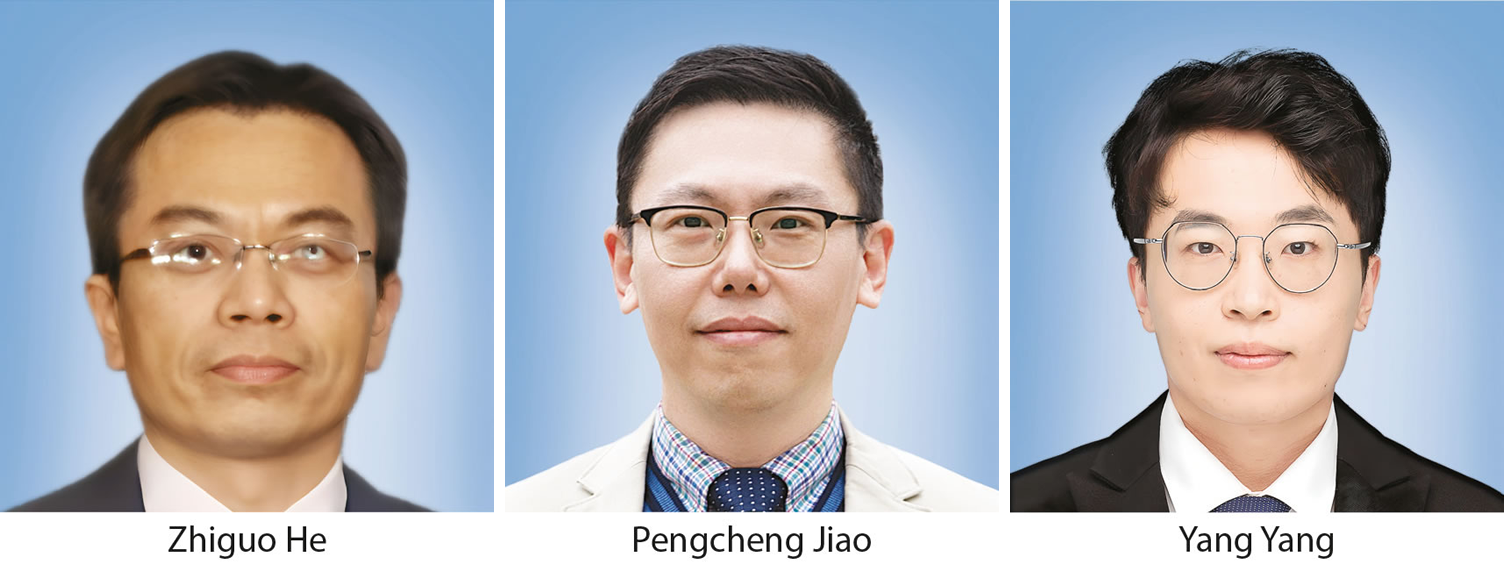
Zhiguo He is a professor at the Institute of Port, Coastal and Offshore Engineering, Ocean College, at China’s Zhejiang University; Director of the university’s Institute of Port, Coastal, and Offshore Engineering; and Vice-Director of the Engineering Research Centre for Oceanic Sensing Technology and Equipment. He is also the Chair of Technical Committee on Coastal and Maritime Hydraulics of the International Association for Hydro-Environment Engineering and Research.
Education:
• 2002 – MSc; Zhejiang University, China (Civil Engineering)
• 1999 – BSc; Xian University of Architecture and Technology
2017 – Second Prize of the Science & Technology Awards of Shaanxi Province
2016 – Second Prize of the Science &Technology Awards of Zhejiang Province
2013 – Second Prize of the Science &Technology Awards of Zhejiang Province
Ladies and Gentlemen, distinguished committee, colleagues and friends,
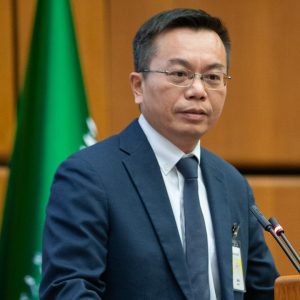
I’m truly honored to accept the Creativity Prize of 2024 PSIPW(Prince Sultan Bin Abdulaziz International Prize for Water) on behalf of my team. This award is a recognition of our effort to solve one of the most challenging problems in water research: how to create underwater robots that can reliably operate in underwater environments and effectively explore resources.
Underwater conditions are very harsh and unpredictable, which makes it difficult for traditional robots to function well. That challenge inspired us to develop Copebot and Fishbot— biomimetic robots inspired by nature, capable of high-speed movement in diverse and complex conditions.
What makes this research meaningful is the interdisciplinary collaboration. By integrating knowledges and techniques in fluid mechanics, mechanical engineering, chemical engineering, materials science, computer science, and even AI and big data processing, we were able to push beyond the limits of traditional robotics. We’ve developed a profound understanding of the core mechanisms that govern the movement and interaction of these robots in water. This approach is opening up new possibilities for exploration, environmental monitoring, and resource management in complex water environments.
I want to thank each member of the team for their hard work, and I’m so grateful to the awards committee for this great honor. Your recognition is a powerful encouragement, motivating us to continue pushing the boundaries of what’s possible in our field. Finally, I want to express my deepest gratitude to my families, friends, graduate students, and Ocean College, Zhejiang University.
We’re excited to continue pushing the frontiers of underwater soft robotics, solving more challenges, and making a meaningful impact on the water sector and beyond.
Thank you once again for this incredible honor.


