

- Overview
- Winner Profile
- Acceptance Speech
- Winning Work
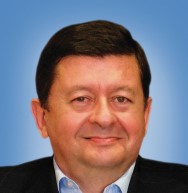
J. Jaime Gómez-Hernández – Universitat Politècnica de València, Spain
Dr. Gómez-Hernández’ greatest achievements in solving this problem include (1) proposing that natural heterogeneity is not well represented by multiGaussian fields, and (2) developing the ‘self-calibrating method’ using pilot points for the stochastic inversion of natural heterogeneity, which yields an estimate of the parameters, but also an estimate about their uncertainty. Both contributions, due to their novelty, were met with strong opposition at first, but have become common practice today.
Dr. J. Jaime Gómez-Hernández
Dr. Gómez-Hernández is Professor of Hydraulic and Environmental Engineering at the Universitat Politècnica de València, Spain.
Education:
• 1992 – PhD; Stanford University (Geostatistics for Natural Resource Evaluation)
• 1991 – MS; Stanford University (Applied Hydrogeology)
• 1988 – Ingeniero de Caminos y Puertos; Universitat Politècnica de València (Civil Engineering)
Selected Awards:
2021 – Distinguished Lecturer for the International Association of Mathematical Geosciences
2020 – William Christian Krumbein Medal
1999 – Prize for Research and Technology of Wastes
1990 – Centennial Teaching Assistant, Stanford University
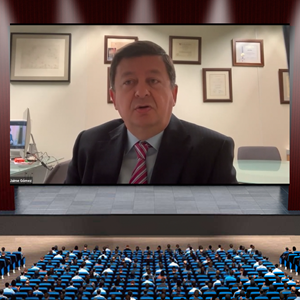
His Royal Highness, authorities, ladies and gentlemen:
It is a great pleasure and honor to be awarded the Prince Bin Abdulaziz International Prize for Water. Recognition is the best reward that we scientists may have, and receiving this prize raises the recognition to its highest levels, since, without any doubt, this is the most important prize worldwide in water resources. Thank you.
Thank you also to the prize council members and to the many people who have accompanied me in my scientific journey, particularly all my former Ph.D. students, without whom most of my research could not have been completed. Last but certainly not least, thanks to my family and especially to my wife, Inma, for having provided during all these years the kind of support that we, crazy scientists, need at all times.
I have been working on groundwater for the last thirty-five years, and I have been complaining that groundwater does not receive the attention by politicians, managers, and the public in general that it deserves. Fortunately, HRH Crown Prince Sultan Bin Abdulaziz's wisdom has put water on the spot, and especially groundwater, the invisible resource.
Groundwater is a precious resource, the magnitude of which is not well understood. Did you know that about 50% of the population drinks groundwater, or that 50% of the water that flows in the rivers comes from groundwater, or that 40% of the irrigation water is pumped from the subsurface, or that groundwater is the only safe water supply in many parts of the world?
Yet, groundwater is not very well known and is not very well managed, either.
I have been attracted by mathematics since my childhood and later by computer science. Groundwater allowed me to combine both to better understand how groundwater moves underground and how aquifers may look like. We proposed new ways to interpret the data and new models to describe it. We also warned about the difficulty of making precise predictions and the importance of tagging those predictions with some uncertainty. We claimed that aquifer heterogeneity could not be modeled with simple Gaussian models, and we were heavily criticized for it. We proposed new approaches to solve the inverse problem in groundwater. And lately, we developed new ways for the identification of contaminant sources in aquifers. All of these always aimed to improve our knowledge of the underground.
Because the better we understand how aquifers function, the better we can make the best use of them: as alternative water storage to mitigate the impact of climate change, as a way to prevent saltwater intrusion, as an instrument critical to sustaining aquatic ecosystems, or simply as the source of water that should continue feeding half the world population.
Thanks again for helping to make the invisible groundwater visible.


